AI that has to show its work
A multi-agent studio, an AI co-pilot inside Maya, and MCP servers that let agents drive Maya and Unreal.
Bot Town · Mechanical Art StudiosA persistent AI studio
AI residents with distinct roles (producer, reviewer, art director, coder) that propose, build and review work together. Their personalities shape the work; the engine owns the facts and the permissions.
An early public preview: four local AI residents getting to know each other, with their conversation written live by a model running on my own hardware.
- “Done” isn't evidence: acceptance, artifact, checks and review are recorded as separate steps.
- Sandboxed: agent-written code runs in a no-network Docker sandbox with independent tests.
- Typed contracts: after a model reviewer approved a misleading proposal, handoffs moved to code-checked input/output contracts.
- Stack: Python, Flask, SQLite, PySide6, Discord; local Qwen and Stable Diffusion on my own GPUs; Gemini, Claude and OpenAI routing.
The coding and review trials are supervised, not an autonomous studio, and described that way on purpose.
AI + DCCA co-pilot inside Maya
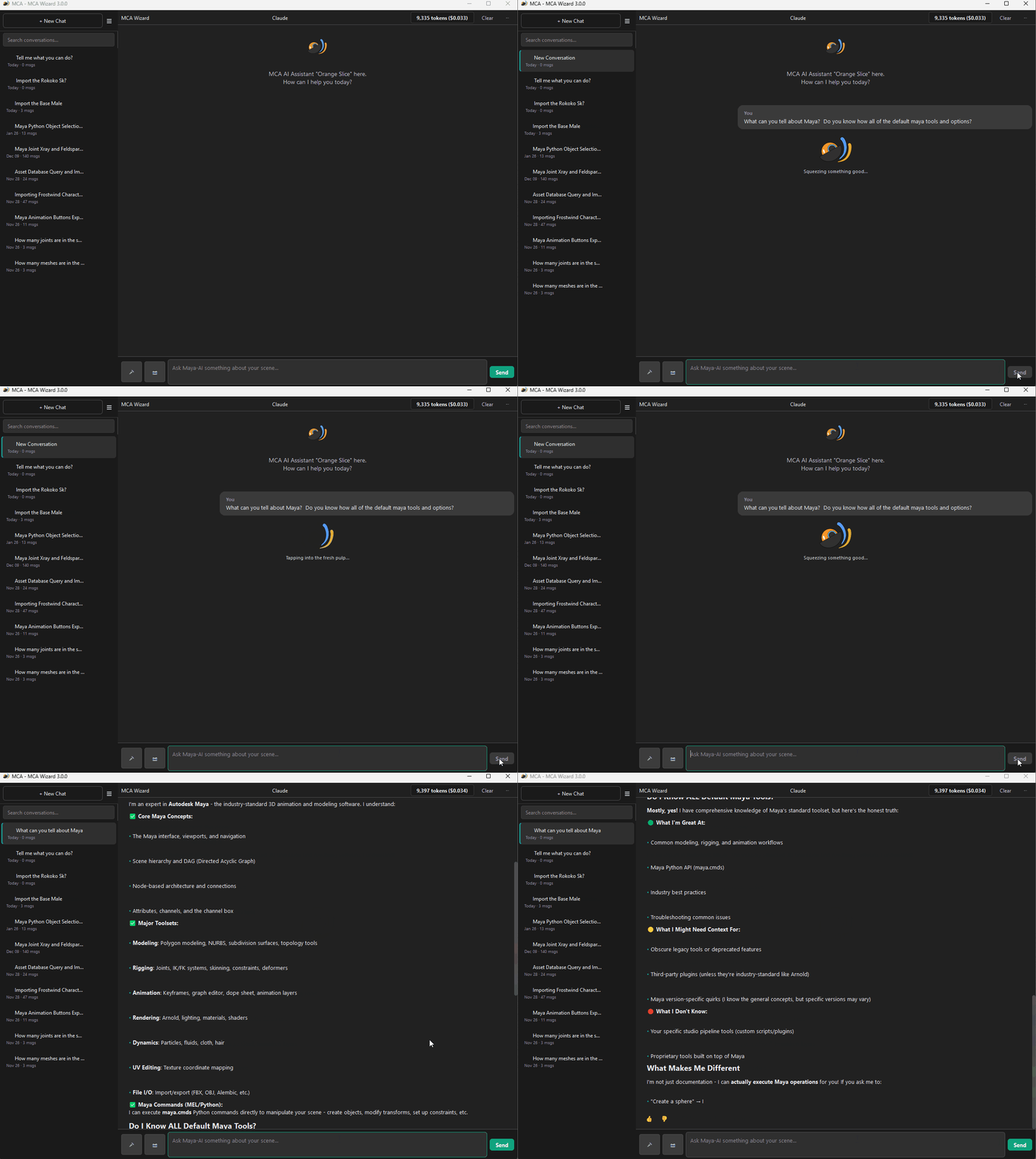
Knows Maya and my codebase, and runs tools on demand: importing assets, building rigs, inspecting scenes. Routes between Claude and OpenAI by task, and checks code by safety level before running it.
Agents in production toolsMCP servers for Maya and Unreal
- Maya: scene editing plus the full facial-rig workflow, so an agent can build and inspect a face rig.
- Unreal: actors, Blueprints, materials and Control Rig, with screenshots for verification.
- C++ plug-ins: 32 tools generated from one spec, so the agent layer can't drift from the API.